Port Growth Fuels Industrial Real Estate Rush Inland
Record container volumes at the Port of Charleston are driving warehouse and logistics demand from the Neck area to Summerville, Ladson, and Goose Creek.
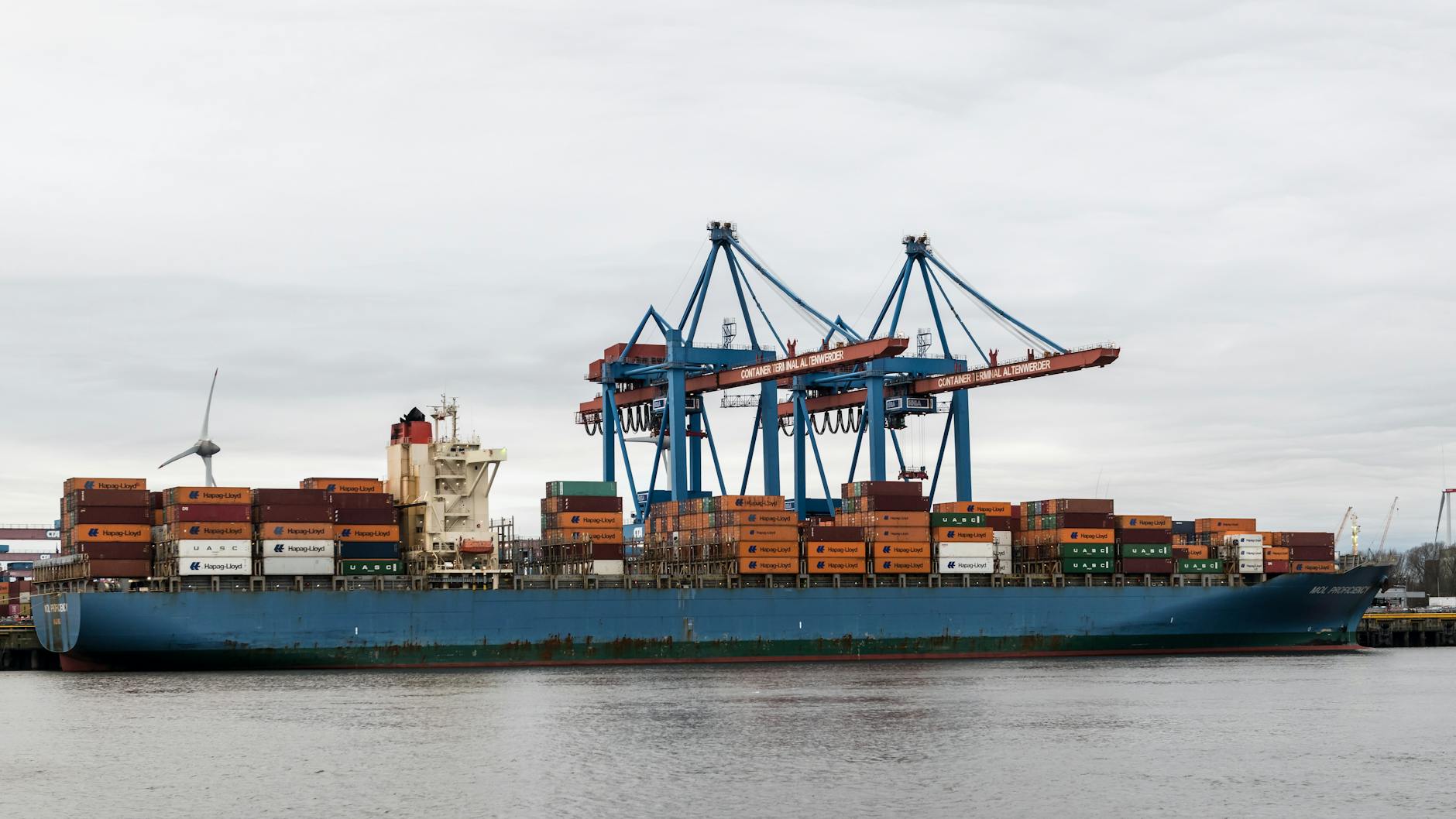
Industrial vacancy rates along the Rivers Avenue corridor in North Charleston fell below 4 percent in the first quarter of 2026, according to brokerage data compiled by Charleston Sentinel, as logistics operators scramble to lock down warehouse space within a short haul of the Port of Charleston’s two major container terminals.
The squeeze reflects a broader reality reshaping commercial real estate across the tri-county region: the Port of Charleston, now one of the fastest-growing container ports on the East Coast, is generating demand for distribution and fulfillment space faster than developers can deliver it. The port handled record TEU volumes in recent years, and the SC Ports Authority has signaled ongoing expansion plans for both vessel capacity and landside infrastructure.
Much of the pressure traces directly to the Hugh K. Leatherman Terminal, the $2.4 billion facility on the Cooper River in North Charleston that opened in 2021. The terminal brought deep-water container capacity to a stretch of riverfront that had long been underused, and its operational ramp-up has pulled logistics tenants northward along the peninsula. The Leatherman Terminal, paired with the established Wando Welch Terminal across the harbor in Mount Pleasant, gives the port a two-terminal system capable of handling the largest vessels calling on the East Coast.
“Every new crane that goes up at Leatherman creates demand for 200,000 to 300,000 square feet of warehouse space somewhere in the region,” said Mark Etheridge, a senior industrial broker with Colliers in Charleston. “The question is where that space gets built.”
For years, the answer was the Neck — the narrow upper peninsula of Charleston squeezed between the Ashley and Cooper rivers. The area’s proximity to both terminals made it a natural staging ground for drayage operators, transload facilities, and third-party logistics firms. But available industrial parcels on the Neck have grown scarce, and asking lease rates for Class A warehouse space there have climbed above $9 per square foot on a triple-net basis, according to Etheridge.
That cost pressure is pushing tenants inland. Summerville, Ladson, and Goose Creek have absorbed the bulk of new industrial leasing activity over the past 18 months, with speculative warehouse projects of 100,000 square feet or more breaking ground along the Interstate 26 corridor in Dorchester and Berkeley counties. Lease rates in those submarkets remain in the $6 to $7.50 range, offering meaningful savings for operators willing to add 15 to 20 minutes to their port drayage runs.
Charleston County property records show that a New Jersey-based logistics REIT closed on a 42-acre parcel near Ladson in late 2025 for $11.2 million, a price that would have been unthinkable for that submarket five years ago. A second transaction, a 28-acre site off U.S. 78 in Summerville, sold to a Georgia-based developer for $7.8 million in January.
“The corridor from North Charleston out to Summerville is becoming one contiguous logistics zone,” said Lisa Cantrell, director of economic development for Dorchester County. “The port is the engine, but the growth is regional.”
The SC Ports Authority’s own expansion plans suggest the demand curve will steepen. The authority has outlined phased capacity increases at the Leatherman Terminal and continued investment in inland port operations designed to move containers by rail to distribution hubs in the Upstate and beyond. Those investments aim to keep Charleston competitive with Savannah, which has pursued its own aggressive expansion at Garden City Terminal.
For commercial real estate investors tracking the Southeast, the Charleston port complex represents a durable demand driver. But the development math is getting harder closer to the water, where flood risk, wetland mitigation requirements, and rising land costs constrain new construction.
The result is a market splitting in two: premium, port-adjacent space on the Neck and the Rivers Avenue corridor commanding top-of-market rents, and a fast-growing secondary ring of warehouse parks spreading through the suburban tri-county area. Both segments are tightening.
Nicolle DeRosa covers coastal development and real estate for Charleston Sentinel. Reach her at [email protected].